
 0
 0
REVIEW
42nd Street Forever: The Peep Show Collection Vol. 01
Genre: Peep Show, Clip Show, Collection
Year Released: 1960s through 80s, 2014 DVD
Runtime: 1h 59m
Cast: Annie Sprinkle, Susan Nero, Lisa DeLeeuw, John Holmes, and various performers
Where to Watch: available now; order your copy here: www.impulse-pictures.com
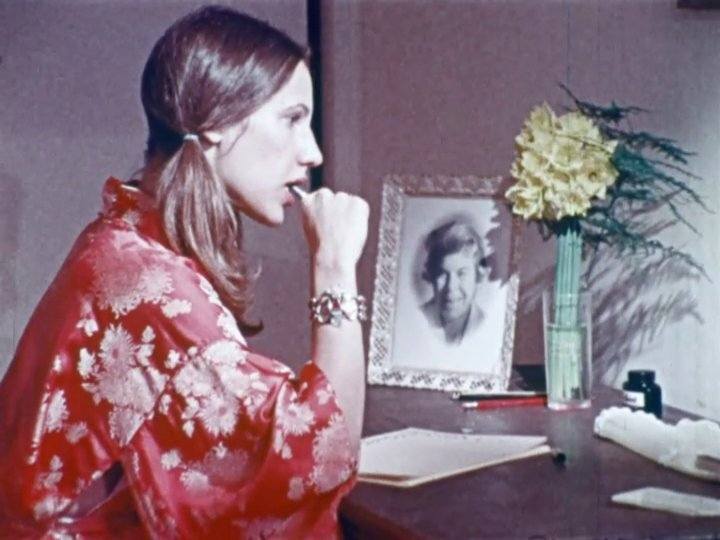
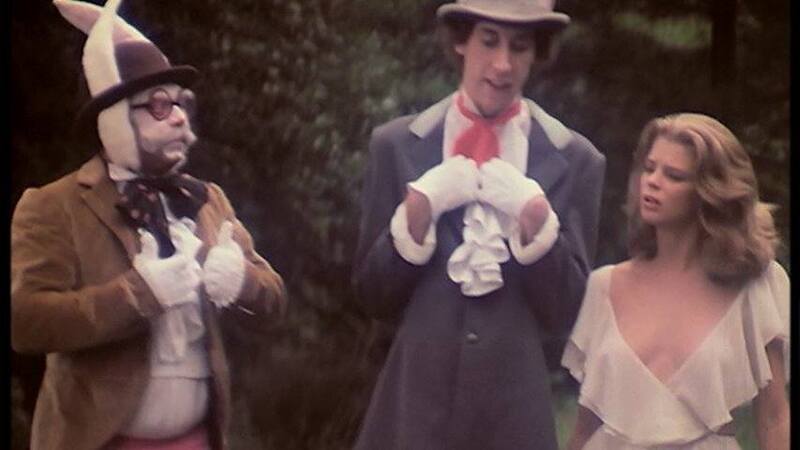
RAVING REVIEW: There was a time when watching porn required more effort than opening a browser and having basically everything imaginable flood your screen in seconds. You might’ve had to venture into the back of an adult bookstore, find yourself a private booth, feed some coins into a machine, and hope the film inside was worth the money! A few minutes of grinding away behind a cloudy pane of glass. Meanwhile, somebody waited outside, and the timer ticked. The picture was never going to be crystal clear, the performers weren’t guaranteed to be A-listers, and the experience could be over before you’ve “gotten your money’s worth”. It was a very different world, and 42ND STREET FOREVER: THE PEEP SHOW COLLECTION VOL. 01 does a wonderful job of preserving part of it. Fifteen vintage 8mm scenes, complete with scratches, imperfections, splices, and faded colors across the picture, have been assembled into a collection that captures an important period of adult film history. Sometimes the imperfections are every bit as interesting as the scenes themselves, and sometimes they’re crawling right across a close-up of a cock sliding into somebody.
Impulse Pictures has taken the right approach with this release. Rather than trying to clean up every scratch, they remastered them from surviving original prints while letting their age and physicality remain visible. Some look surprisingly good, others have clearly endured decades of less-than-ideal handling, and a few appear as though they’ve been rescued from a forgotten cardboard box in the back of somebody’s wet basement. I wouldn’t want them presented any other way. These weren’t pristine productions when they were new, and expecting them to resemble high-def adult entertainment would completely miss the point.
Robin Bougie, publisher of CINEMA SEWER, contributes an excellent set of liner notes titled “Charmingly Wet and Erect,” and his observations offer valuable context for understanding why these films remain so interesting. He describes the unusual innocence he sees in early hardcore cinema, an idea that sounds contradictory until you consider the circumstances surrounding its creation. These were productions coming from a period when explicit sexual imagery was still considered controversial and frequently illegal. Scenes that appear ordinary to modern audiences. A woman taking a load across her stomach, a man going down on somebody on a couch, once represented a challenge to prevailing social expectations.
The business model explains a lot about the films themselves. They weren’t always made to tell complete stories or provide satisfying narrative conclusions. They were designed to deliver, attract attention, and encourage customers to keep feeding money into the machines. A few minutes of footage could be a complete product, a mouth wrapped around a cock, a body bent over a table, a messy finish; regardless of whether it offered anything resembling a full arc, it didn’t matter.
Watching fifteen of those shorts on a DVD makes their limitations considerably more apparent. Some begin almost as soon as the scene starts, with little introduction to the performers. Others establish a scenario and then abandon it just as it seems to be developing. A few end so abruptly that the transition becomes unintentionally funny, midstroke, midmoan, sometimes a beat before anybody had a chance to breathe.
There’s something satisfying about seeing a splice or watching debris pass through the frame, a hair or a fleck of dirt drifting over a close-up of somebody’s crotch like a fly walking across a window. It reminds you that these were physical objects, handled and stored long before digital distribution eliminated that need. The films survived because somebody kept those prints, whether through preservation or accident, and now they’re available to audiences who might otherwise never have known they existed.
The sound presentation is equally distinctive. These are essentially silent films, accompanied by the sound of a projector rather than conventional dialogue, music, or effects. Initially, it’s a little strange. Contemporary adult entertainment relies heavily on audio to establish atmosphere, and even older features often incorporated music or post-production sound. Here, the performers and their physicality have to communicate everything. I can understand why some viewers might find that frustrating. But adding music to make the experience feel modern would’ve defeated the purpose of what these were.
Annie Sprinkle is especially memorable in FRIENDS AND LOVERS. She’s cheerful and shameless, working through the scene with a grin, lots of eye contact, and a way of throwing herself into it. Together, they make the scene work and make the difference between a body and a person having a good time. Her personality comes through despite the limited resources, and a playful enthusiasm helps distinguish her appearance. Bougie discusses her participation in the context of her later reflections on early adult filmmaking, including her belief that performers’ enjoyment could be as important to the experience.
Lisa DeLeeuw offers a distinctive personality and relaxed participation in a group encounter. A mix of arms and legs, with hands and mouths on several bodies at once. This makes her one of the performers worth watching. Bougie’s liner notes emphasize the humor and interactions in her appearance, including moments that feel more spontaneous than staged. Those details matter because they show how personality could become an attraction even when the production offered little narrative substance.
Susan Nero also contributes to the collection’s historical appeal, providing another recognizable connection to the adult industry of the period; her loop is a women-only scene in which the changes of partner and position come so fast and so joyfully that the whole thing plays like a sexcrazed game of Twister. The compilation isn’t designed as a retrospective of these performers’ careers, and it doesn’t provide biographical information. Their inclusion helps show how many different types of productions existed in the industry. Not every appearance by an established performer was part of a major feature.
John Holmes is probably the most recognizable name in the collection, and his appearances show how a performer could become a marketing attraction. DEEPER THROAT uses a voyeuristic setup involving a keyhole, through which Holmes watches a woman undress, sit down, and pee before he falls through the door and gets working on her. Holmes himself is a gangly goof mugging for the camera like he’s already auditioning for something bigger.
Holmes also appears in IT TAKES A THIEF, where the premise introduces a theatrical element that reflects the period’s willingness to combine exaggerated situations, in this case, a gun pointed at a woman before the gun becomes irrelevant and the fucking starts. Bougie notes the performer’s playful attitude in the scene, especially the contrast between the threatening scenario and the comparatively lighthearted presentation.
One of the most interesting details in the liner notes concerns Marc Stevens and his appearance in NURSE’S AID. Stevens plays a sleeping hospital patient attended by two nurses, a surprisingly passive role for someone who developed a reputation as a recognizable adult performer; he spends much of the scene flat on his back while the nurses do the work. Bougie points out the peculiarity of the arrangement, along with how Stevens’ contributions to the industry have received far less lasting attention than those of some contemporaries.
Other titles, including ONE HUNG LOW, WET AND WILD, and SPICE OF LIFE, demonstrate the same marketing approach. They’re designed to communicate exactly what kind of entertainment audiences should expect, usually with a little wordplay or an intentionally outrageous proposal, a pun on the size of a dick, or a promise of a wet pussy. There’s just something funny about the lack of sophistication. The titles existed to attract attention, and they did.
The differences in performer personalities, physical settings, and visual approaches are more interesting than I expected. Some scenes have an almost documentary-style immediacy, while others are constructed around fantasies. A few performers seem more comfortable with the camera, while others seem aware of the situation’s artificiality. Those distinctions become especially noticeable without dialogue or music; you’re reading faces and bodies for everything.
I like that they were elaborate sets designed to create luxurious fantasies. They’re often ordinary rooms, simple interiors, or locations that seem to have been chosen mainly because they were available. A mattress on the floor, a chair, a wall to be braced against. Lighting is pretty much the bare minimum, camera placement can be awkward, and there’s little effort to disguise the limited resources involved. But that’s why it works; it feels like it could have been filmed in anyone’s bedroom. The camera often stays close to the performers, with little concern for composition or elaborate transitions; it just parks itself where the action is and lets the flesh fill the frame.
Bougie’s essay also raises an interesting point about interracial representation in early adult productions. He argues that some of these films presented sexual relationships across racial boundaries at a time when mainstream entertainment remained considerably more restrictive. That’s a meaningful observation, although it shouldn’t be mistaken for evidence that the adult industry was universally progressive or free from discriminatory attitudes. Its history is far more complicated. What matters is recognizing that adult entertainment sometimes challenged cultural restrictions. The relationship between sexual liberation and exploitation has never been simple, and viewing these productions with historical awareness means acknowledging both sides of that reality.
I really appreciate that Impulse Pictures included Bougie’s liner notes rather than simply releasing the shorts without additional context. His essay is passionate, knowledgeable, surprisingly in-depth, and frequently funny. It doesn’t attempt to sanitize what we’re watching or pretend these productions were something other than entertainment. That perspective aligns beautifully with the presentation itself. The entire release feels designed for collectors who appreciate obscure cinema and understand that historical significance doesn’t necessarily require artistic sophistication. I can’t believe there are 81 more! I can’t wait to check out the depths of the 42nd Street Forever Collection!
It’s a reminder of how much adult film history remains vulnerable to vanishing. Physical prints deteriorate, private collections are lost, businesses close, and scenes once shown on projectors in these backrooms can become hard to find. Unlike mainstream Hollywood productions, many of these films were never considered important enough to receive preservation (hell, even early mainstream movies suffered that same fate). Their survival often depended on collectors, distributors, and enthusiasts who recognized their value long after the original commercial market had vanished.
I think that’s the balance that makes 42ND STREET FOREVER: THE PEEP SHOW COLLECTION VOL. 01 so effective. You can appreciate the performers, enjoy the absurd scenarios, get an eyeful of everything the camera refuses to look away from, laugh at the occasional awkward moment, and recognize the importance without feeling obligated to declare every short a forgotten masterpiece. These productions were inexpensive, opportunistic, sometimes ridiculous, and often made with little artistic ambition. They’re fascinating reminders of an entertainment culture that has largely disappeared.
Impulse Pictures has preserved fifteen pieces of a largely forgotten moment in such a storied industry. Robin Bougie’s excellent liner notes help establish why that experience matters. It’s funny, filthy, occasionally frustrating, and considerably more interesting than a collection of 60s-80s adult shorts has any obligation to be. You don’t have to pretend every reel is exceptional to appreciate what they represent. Sometimes the best way to revisit the past is to leave the dust exactly where you found it. This collection understands that, and it’s all the better for it.
I’m always happy to hear from my readers; please say hi or send me any questions!
[photo courtesy of IMPULSE PICTURES, SYNAPSE FILMS]
DISCLAIMER:
At Red Light Rated, we are committed to transparency and honest reviews. Occasionally, we receive free access to certain websites to provide in-depth evaluations, but this does not influence our opinions. We always prioritize fair, unbiased, and insightful assessments to help you make informed decisions. Additionally, some links in our reviews are affiliate links, meaning we may earn a small commission if you sign up through them at no extra cost.